
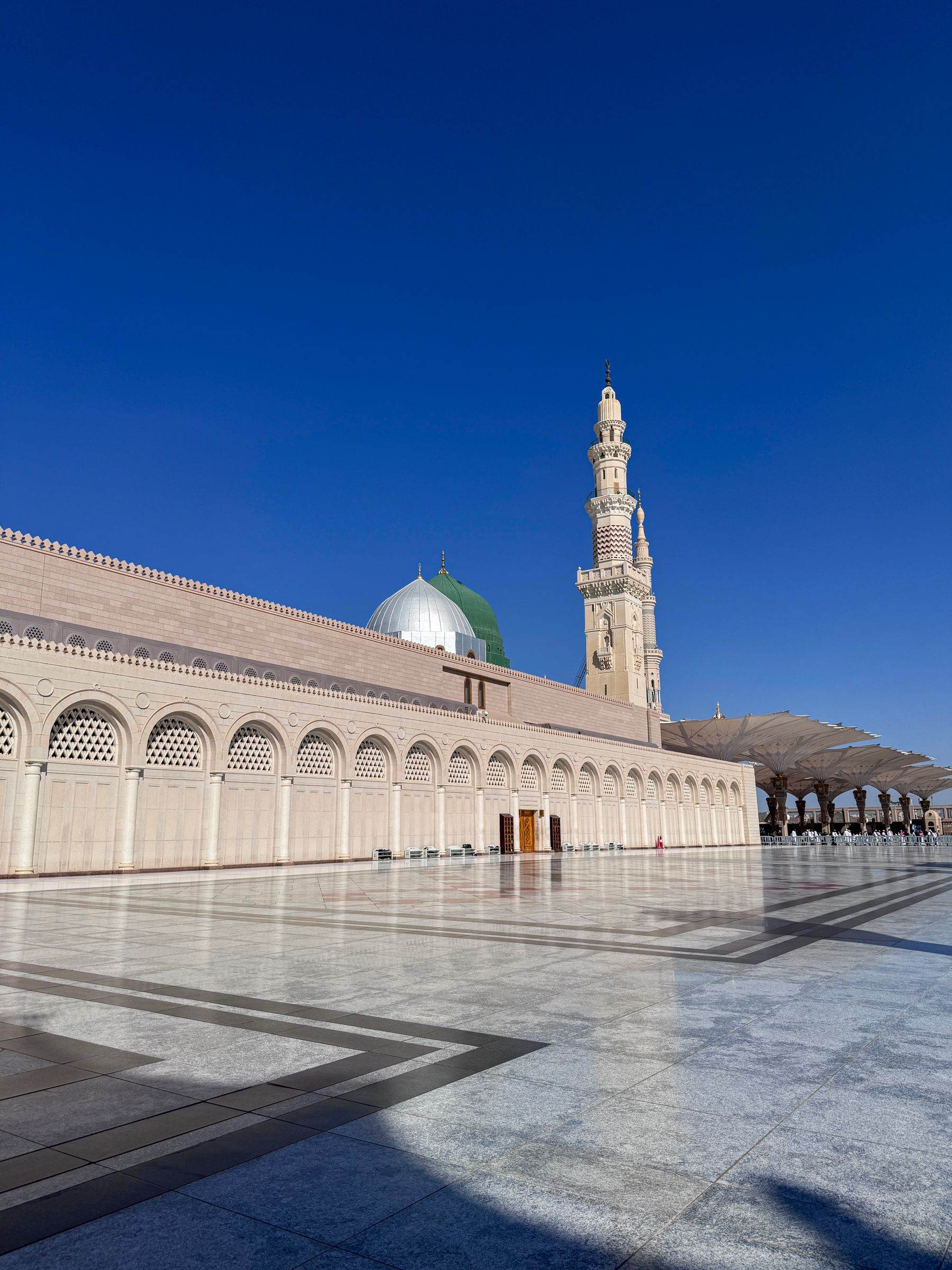
A hotel described as 400 metres from the Haram can still be difficult for a family if the route includes a slope, crowded crossing, distant entrance, or unreliable shuttle. Compare the journey from the room to the prayer area, not the map number alone.
Straight-line distance is not the actual walk
Map listings often show a straight-line distance or a general property location. Pilgrims experience the usable route from the hotel entrance to the entrance they can actually use at the Haram, which may be longer.
Ask which entrance the route reaches, how long the walk usually takes at a comfortable pace, and whether the quoted distance describes the building boundary or the practical pedestrian route.
Check crossings, slopes, surfaces, and crowds
A short route can still include busy roads, ramps, uneven paving, underpasses, or crowded forecourts. Those details matter when travelling with elderly parents, children, a wheelchair, or anyone who needs frequent rest.
Consider the return walk after prayer as well as the outward journey. Peak-time crowd flow can turn a manageable daytime route into a slower and more tiring trip.
Understand the shuttle and lift arrangement
If a hotel depends on a shuttle, ask where it drops passengers, how frequently it runs, whether service changes around prayer times, and what happens when buses are full. A shuttle can help, but waiting may be difficult for elders or tired children.
Inside the hotel, lift capacity matters during busy periods. Ask about lift access, steps at the entrance, wheelchair movement, and whether your room category is likely to be far from the lifts.
Makkah and Madinah require different checks
In Makkah, elevation, road layout, construction, and the Haram entrance used can materially change the walk. A lower headline distance does not always mean easier access.
Madinah is often flatter, but the side of Al-Masjid an-Nabawi, the gate closest to the hotel, family meeting arrangements, and crowd movement still affect convenience. Compare each city separately instead of accepting one general distance claim.
Star rating does not measure convenience
A premium star rating can describe facilities and service without guaranteeing the easiest walking route. A simpler hotel with clearer access may suit an elderly pilgrim better than a higher-rated property reached by a difficult route.
Confirm room occupancy, bedding, bathroom access, meal basis, and whether the hotel name is guaranteed or may be substituted. These details determine how the stay works for the family day to day.
Priorities for elders and children
For elders, prioritize a manageable route, reliable lifts, places to rest, wheelchair access, and transport that reduces waiting. For children, consider meal access, room privacy, sleep, and how easily the family can return to the hotel between prayers.
Agree on a pace based on the least mobile traveller. A hotel choice that protects their energy can improve the entire family's time for ibadah.
Questions to ask before approving a hotel
Ask for the hotel name or category, room type, occupancy, meal basis, actual pedestrian route, approximate walking time, closest practical Haram entrance, lift access, shuttle frequency, and any substitution policy.
Put the answers in the written quotation. If a named hotel is unavailable, the replacement standard and approval process should be clear before payment.
Before approving a hotel, confirm its name or category, actual access route, room occupancy, lifts, shuttle arrangement, meal basis, and substitution policy in writing.
Use these hotel checks while comparing family Umrah packages for elders and children and private and 5 star Umrah options.